
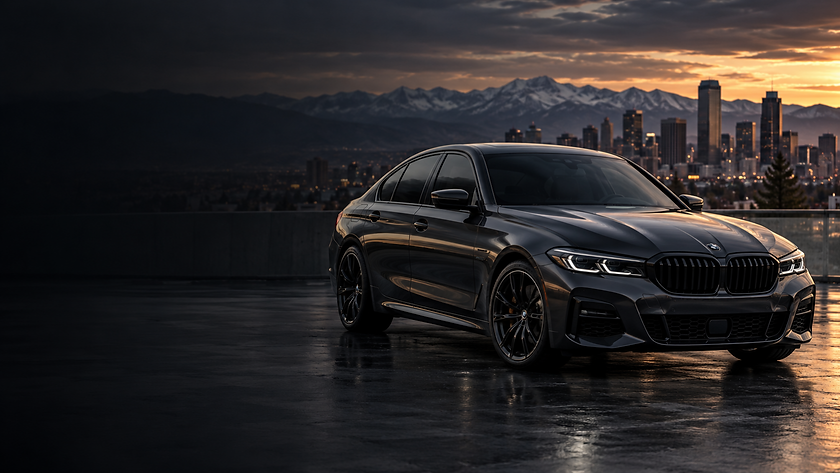
Protect Your Car From Denver’s Strong Sun
Denver's sun is no joke. Between the altitude and the near-constant sunshine, your car takes more UV exposure here than it would in most of the country. Window tinting in Denver, CO, cuts down on that heat and glare while keeping your ride comfortable, whether you're stuck in traffic on I-25 or driving I-70 up into the mountains. At Luxury Autowerks, we install film that's built to handle this climate and stays within Colorado's tint laws.

Denver's Altitude Means More UV, Not Less
Denver sits over 5,280 feet above sea level, and thinner air at that altitude does less to filter out UV rays before they hit your windshield. The city also gets somewhere around 245 sunny days a year, so your dashboard, seats, and skin take a beating if the windows are left bare.
A quality tint blocks a large share of that UV without changing how your car looks from the outside.

Ceramic Or Standard Film, Depending On What You Need
Standard film is the more affordable option and works well for basic privacy and a cleaner look, though it doesn't block heat the way ceramic does. Ceramic film costs more upfront but rejects significantly more heat and UV without the metallic tint that can interfere with radio or GPS signals. It also tends to hold its color longer under constant sun, which matters more here than in a lot of other cities.
We install premium automotive films from industry-leading brands such as 3M, LLumar, XPEL, and Ceramic Pro, with manufacturer-backed warranties covering defects such as peeling, cracking, yellowing, and delamination, with coverage varying by film and manufacturer. We'll walk you through both so you're picking based on what you actually want, not just the price tag.

Tint That Keeps You Within Colorado's Legal Limits
Colorado has specific rules on how dark your windows can go, and getting it wrong can mean a ticket. Front side windows need to let in at least 27 percent of light, and reflective or mirrored film isn't allowed on any window. Windshields can only carry non-reflective tint above the AS-1 line, that small marking a few inches down from the top. Rear side windows and the rear window follow the same 27 percent rule, unless your windshield and front side windows already let in at least 70 percent of light, in which case there's no darkness limit on the back.
That's why a lot of Denver drivers keep the front legal and go darker in the back. We know these limits and install film that keeps you compliant, not guessing. Getting it wrong is a class B traffic infraction, with fines running $15 to $100 plus a surcharge — and officers can check your windows with a tint meter on the spot, so it's not worth risking over a shade you're unsure about.

Built To Handle Denver's Heat And Its Winters
Summers here regularly push past 90 degrees, and a car sitting in direct sun in a parking lot can get brutal fast. Good tint takes a real bite out of that heat, so your air conditioning doesn't have to work as hard and your seats and steering wheel aren't scalding by the time you get back in.
In winter, tint doesn't do much for cold, but it does cut glare off snow and ice, which matters more than people expect on bright days after a storm.
Installed The Right Way, Not The Fast Way
Bubbling, peeling, and purple fading are almost always signs of a rushed install or cheap film. We take the time to prep each window properly and use film backed by a real warranty, so you're not back in a shop two years from now dealing with a tint job that didn't hold up.
We also tint vehicles for drivers in Highlands Ranch and Centennial, so if you're coming from either area, you're already covered.
